Macbeth Part 2: 'What’s Done Cannot Be Undone’


Episode 223:
Last time, in the first part of my look at ‘Macbeth’, I took you through the plot of the play and discussed the themes of ambition and guilt in it, with a focus on the character of Macbeth himself. I also looked at some of the language in the play and at the possibility that Thomas Middleton updated it for a revival in the 1610s or 1620s, and how he probably developed the scenes with the three witches at a time when devil plays and ideas about witches in the real world were very popular. This is the text that we most likely have in the First Folio, which is the first printed version of the play. Please do listen to that episode first before embarking on this one. Having spent some time on the character of Macbeth in the last episode I’m now going to pick up with a look at his wife.
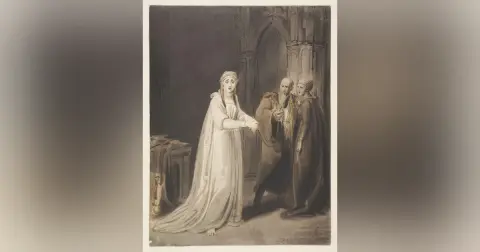
The character and actions of Lady Macbeth
References to equivocation in the play
The trial of Henry Garnet and the use of equivocation
The witches and the Macbeths as equivocators
The impact of the Porter’s speech
The Porter’s scene as a throwback to medieval cycle plays
‘On The Knocking at the Gate in Macbeth’ by Thomas De Quincey
The critical history of the play
The later performance history of the play
The curse of ‘the Scottish play’
‘Macbeth’ as a very Jacobean play
Support the podcast at:
www.thehistoryofeuropeantheatre.com
You can find an advertisement free version of the latest podcast episodes by joining on Patreon at the lowest paid tier level – that’s for just £1 per month.
Hosted on Acast. See acast.com/privacy for more information.