Sejanus His Fall: ‘Ambition Makes More Trusty Slaves Than Need’


Episode 203:
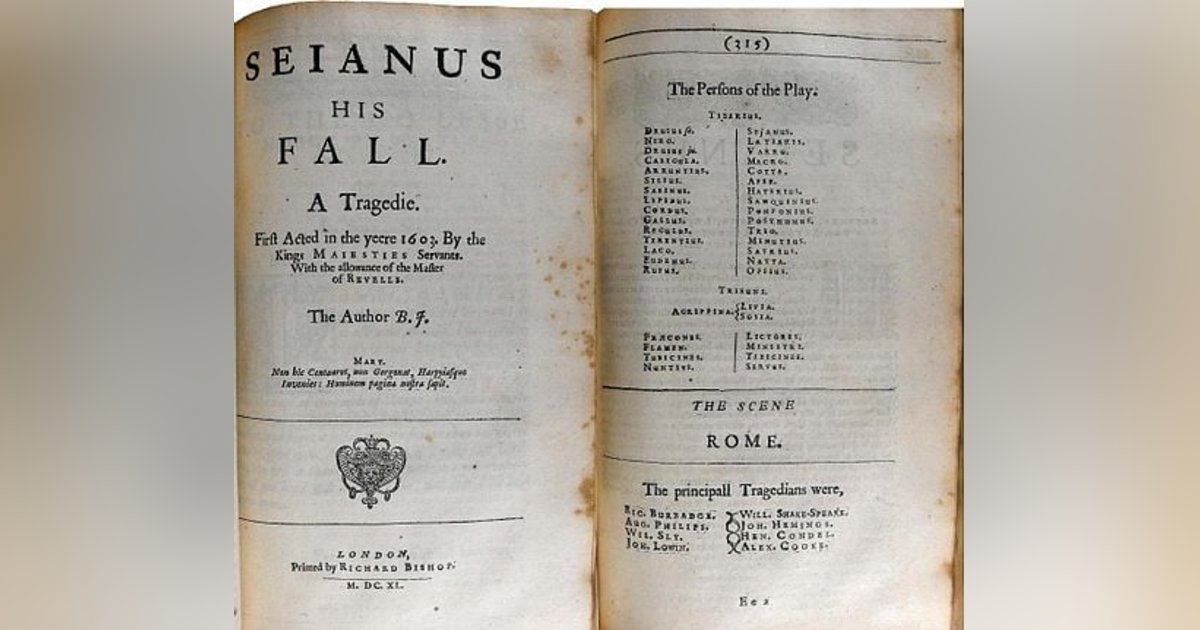
We now stay in the world of the Elizabethan interpretation of classical history and myth with Ben Jonson’s next play ‘Sejanus His Fall’. Rooted more firmly in history than myth Jonson’s play uses the story of a power struggle motivated by personal ambition to look at the nature of power, justice and politics. This was quite evidently dangerous ground for a playwright already known for his clashes with the authorities, but it was not just that commentary of contemporary politics that got Jonson into trouble with this play.
A brief word on the unfinished tragedy ‘Mortimer His Fall’
The ‘argument’ of the play and some thoughts on what the play might have been
The early performance history of ‘Sejanus His Fall’
The possible co-author of the play
The early reception of the play
The background to the poor reception of the play
A synopsis of the play
The ban on satires and histories
The translations of Tacitus and complications with Essex
How John Heyward’s problems with censorship influence the play
The play as a commentary on Elizabethan society
Questions of the control of power in the play
Questions of the application of justice in the play
The motivations of Sejanus
The aesthetic issues with the play
How Jonson mixed comedy and tragedy in the play
The influence of Marlowe on the verse in the play
Jonson censured for the play
The later performance history of the play
Support the podcast at:
www.thehistoryofeuropeantheatre.com
Hosted on Acast. See acast.com/privacy for more information.