The Poetaster: ‘Good Ignorance, I’m Glad Thou Art Gone’


Episode 198:
As Ben Jonson was writing ‘The Poetaster’ in 1601 the Elizabethan age was drawing to a close. Elizabeth would live until March 1603, but by 1601 any hope of a natural heir was long past and her court and councillors were playing a waiting game and with different degrees of secrecy were trying to manipulate the situation over the accession to their own advantage. Jonson, I’m sure, had an eye and an ear on those politics, but the comedy he was writing was more concerned with the politics of the theatre than those in the court. In the previous episode on ‘Cynthia’s Revels’ and in my episodes on Thomas Dekker, that you can still find on the podcast archive, I have touched on ‘the war of the poets’ and this episode on ‘The Poetaster’ will bring these matters to a close. Although it’s not essential you might find listening to those earlier episodes useful, if you have not done so already, before listening to this one.
The early performance of the play and it’s place in the ‘war of the poets’
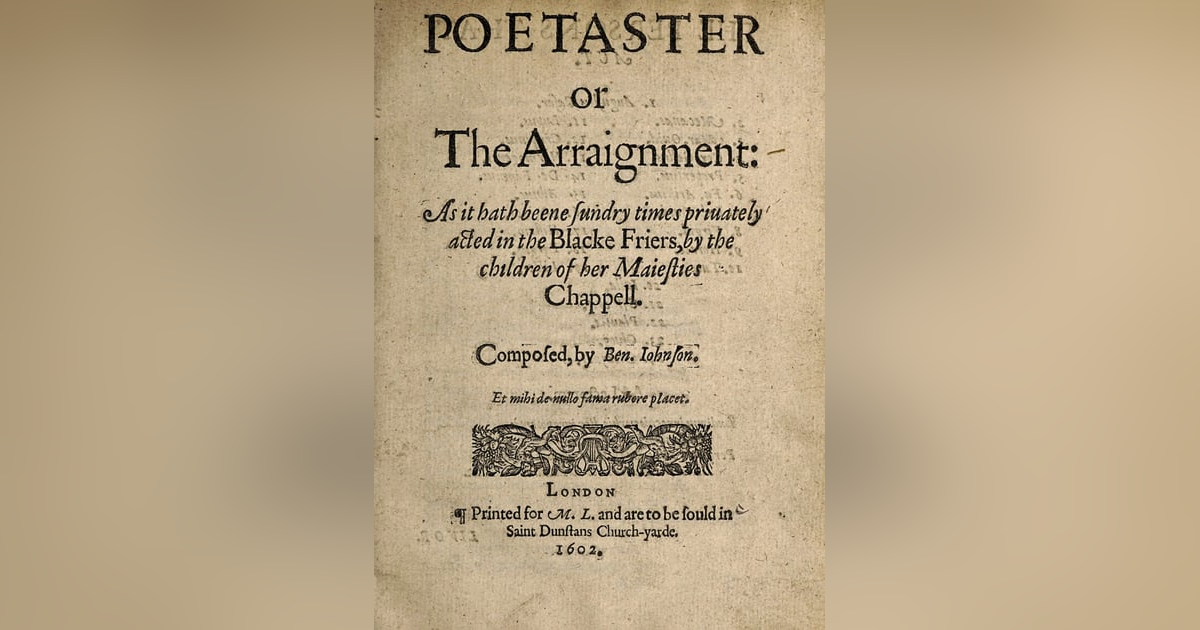
The print history of the play
The theme of the role of the poet
A short synopsis of the play
The caricature of John Marston
The Poetaster and Satiromastix
The feud as fuelled by the rivalry between playing troupes
The poet as councillor and companion to the monarch
The exposing of the poetasters
The change in title
Reference to the Essex rebellion
The attempted censoring of the play
The epilogue
The end of the ‘Poetomachia’
Support the podcast at:
www.thehistoryofeuropeantheatre.com
Hosted on Acast. See acast.com/privacy for more information.